
Self awareness practices give us clear steps to improve our emotional intelligence. They help us make better choices every day. Research shows we often think we know ourselves better than we do.
Activities like quick body scans and labeling emotions in just five seconds are very helpful. They give us a moment to think before we react. This is what mindfulness does.
These small practices are great tools for self improvement. They reduce stress and help us make smarter choices. They also make it easier to handle our emotions.
Start with short routines every day. This builds strong neural pathways faster than long sessions. It’s a simple way to improve your life.
Methods and tools from around the world are available. Nextself.ai offers insights that fit into our busy lives in the U.S. This article will show you easy, repeatable ways to use awareness in your daily life.
Understanding Self Awareness and Its Benefits
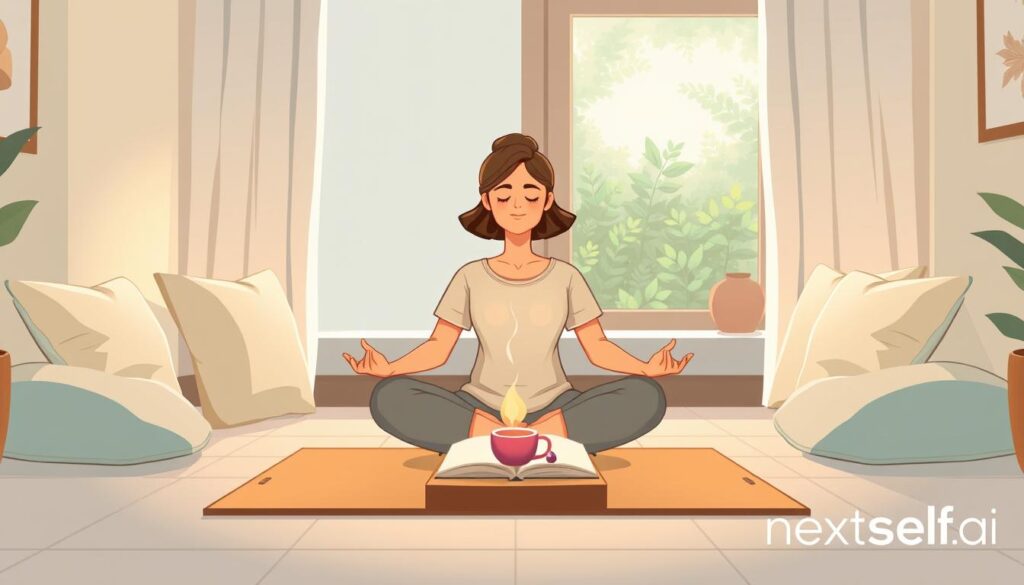
Self awareness means paying attention on purpose without judgment. Jon Kabat-Zinn called it mindfulness. It lets you see thoughts, feelings, and body sensations as they pass.
Practicing self awareness regularly makes your brain better at reflection and feeling. This leads to clearer choices and calmer reactions.
Defining Self Awareness
Self awareness is about watching your inner life on purpose. You notice sensations, urges, and thoughts. Studies show that mindfulness strengthens parts of the brain.
This helps lower stress and improve memory and decision-making skills.
The Importance of Self Awareness in Personal Growth
Awareness shows you where you are. Use Pattern Mapping to find habits that hold you back. Reflecting on values and doing quick checks helps align actions with beliefs.
Small steps like these lead to lasting change.
How Self Awareness Impacts Relationships
Being more aware boosts emotional intelligence. This makes talking to others smoother. Naming emotions engages the brain and reduces emotional intensity.
Short daily habits and longer practices help in emotional intelligence training. They improve listening, setting boundaries, and building trust in conversations.
Practical Self Awareness Techniques

Practical steps make self awareness useful every day. Try small routines that fit your schedule. Use tools that help you notice patterns, feelings, and choices.
Journaling for Reflection
Journaling offers clear self reflection methods. Use a simple format: Situation → Reaction → Outcome. This pattern mapping shows triggers and consequences.
Try Nightly Values Reflection for five minutes. Note what felt aligned and what drained you. Use expressive writing to name precise emotions beyond labels like “stressed.”
Use prompt-based entries focused on values and decisions. Over weeks, the entries reveal long-term patterns and fuel behavior change.
Mindfulness Meditation Practices
Short mindfulness exercises strengthen attention and lower stress. Practice naming emotions with affect labeling or the 5-Second Label Trick. Do body scans by focusing head-to-toe for 10–15 seconds per area.
Observe thoughts with the Thought Stream Technique. Use perspective shifts like STOP, H.A.L.T., or the Mountaintop Metaphor. Habit-stack micro-practices into routine moments, such as commutes or coffee breaks.
Even brief daily sessions, or twenty minutes spread through a day, support the prefrontal cortex and improve interoception. Use phone alerts as mini wake-up calls to pause and notice.
Utilizing Feedback from Others
External input reveals blind spots and complements self-observation. Ask for specific, actionable feedback after meetings or projects. Use trusted peers or mentors for regular check-ins.
Practice mindful listening when you receive feedback. Take a breath, observe sensations, then respond to reduce defensiveness. Record feedback in your journal, reflect on emotional reactions, and map links to patterns.
Turn insights into experiments. Set one concrete behavior change to try for a week, then review results. Combining outside input with journaling creates robust self discovery techniques.
Tools and Resources for Self Awareness
Practical resources help make awareness a part of daily life. Here are books, apps, and courses with step-by-step methods and short practices. They’re perfect for between meetings or during a commute.
Recommended Books on Self Awareness
- Coming to Our Senses by Jon Kabat-Zinn — a foundation in mindfulness with guided practices like body scans and mindful moments.
- Emotional Intelligence by Daniel Goleman — research-driven insight into emotional skills and leadership, useful for emotional intelligence training.
- Books that pair practice and reflection typically include exercises for values clarification and short daily prompts to support self improvement tools.
Apps to Enhance Self Awareness
- The Mindfulness App — over 500 guided meditations and offline access. Use short sessions to build micro-habits and track progress.
- Meditation and habit-tracking apps that send reminders help you fit self development activities into busy days.
- To use apps well, set brief daily reminders and attach meditations to natural transitions, such as commuting or breaks.
Online Courses and Workshops
- MBSR-style courses teach body scans, mindful communication, and micro-practices in evidence-based modules ideal for busy schedules.
- Leadership programs that include emotional intelligence training focus on values clarification and sustained attention exercises for leading through stress.
- Choose flexible, short-session courses so self mastery practices become routine instead of another long task.
Build a toolkit with books, apps, and courses that fit your life. Use structured reading, daily micro-practices, and course modules. This way, self development activities and self improvement tools become consistent and reliable.
Overcoming Challenges in Developing Self Awareness
Getting better at self awareness needs effort and realistic goals. Some myths, like needing long meditation or thinking it means being perfect, can slow you down. Short mindfulness moments are powerful, and it’s also about how you interact with others. See it as a journey, not a finish line.
Common Misconceptions
Many think mindfulness means long sits. But, research shows short, frequent practices work well. It’s not just about looking inward; simple acts like mindful greetings and listening can bring awareness to relationships. Self awareness is about noticing patterns and making better choices, not being perfect.
Strategies to Stay Committed
Link self reflection to daily habits, like taking mindful breaths while coffee brews. Use reminders and apps for quick mindfulness checks. Keep a journal to track small victories and add reflective pauses to team meetings for accountability.
Dealing with Emotional Resistance
Starting out can be tough; hard feelings may come up. Begin small and use tools like body scans and breath focus to pause. Check if you’re hungry, angry, lonely, or tired before reacting. Record what triggers you and try small changes, like pausing before answering criticism.
Self improvement is best with small, repeated actions. Mix looking inward with feedback from others. Use self reflection often and focus on tiny, achievable steps for lasting change.